2017 Philanthropy 50 Related Stories ➞
Beware the Bearer of Big Gifts
Philanthropists are facing scrutiny, suspicion, and criticism not seen since the Gilded Age.

By Drew Lindsay
Senior Editor, Special Projects
February 7, 2017 | Read Time: 11 minutes
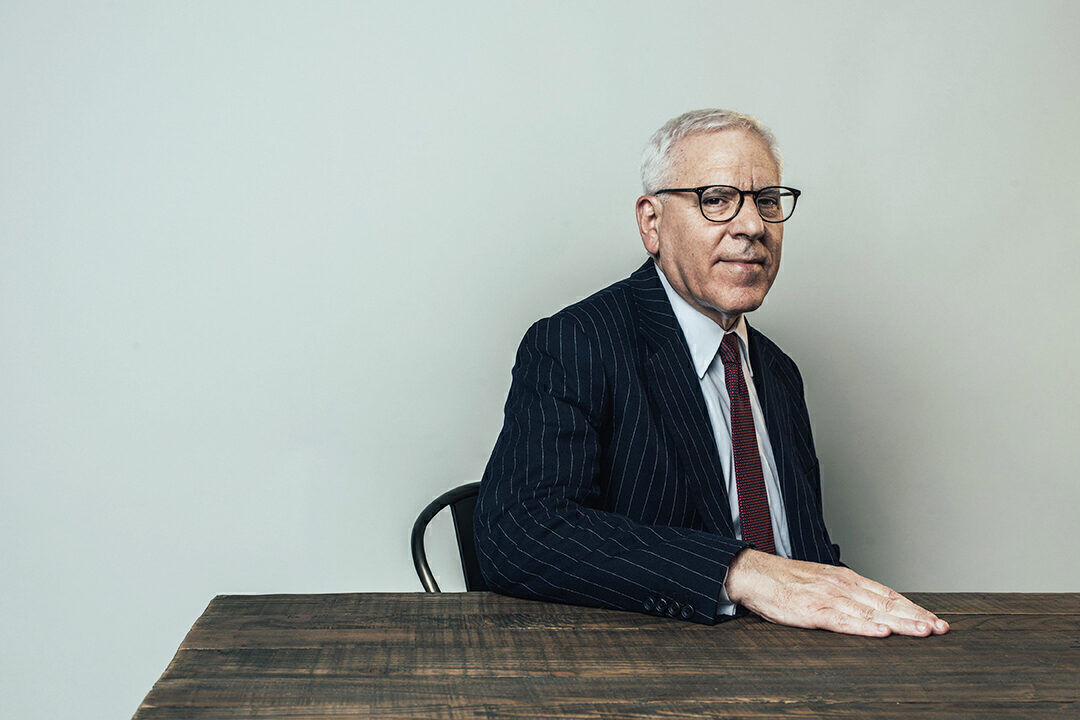
Malcolm Gladwell is known for clear-eyed, research-driven analysis. But after Phil Knight gave $400 million to Stanford last year, the best-selling author worked up a froth of moral outrage on his Revisionist History podcast, devoting nearly an hour to an excoriation of megagifts to elite universities. “I’m obsessed with this issue,” he said.
Just the year before, Mr. Gladwell mocked a $400 million gift to Harvard by hedge-fund manager John Paulson. Surely, he argued in a rapid-fire series of Twitter posts, one of the world’s richest financiers could do more with his charity than fund one of the world’s wealthiest universities. “Next up for John Paulson: volunteering at the Hermès store on Madison avenue,” he wrote.
By and large, big philanthropists are feted as heroes, even saints. But lately it seems like there’s always someone eager to challenge their motives or question their priorities, often in venomous terms. The debate is about more than whether gifts to wealthy institutions like Stanford fritter away philanthropic dollars and, via the charitable deduction, rob government of dollars that might do good in society broadly. Critics also charge that philanthropists are using their gifts to get their way in public policy and civic affairs.

Just ask Bill and Melinda Gates, who are sometimes depicted as bullies using their lucre and influence to bend schools and global-health agencies to their will. Or Mark Zuckerberg and his wife, Priscilla Chan, whose plan to spend $3 billion to cure “all diseases” prompted snide opinion columns about the hubris of the young and rich. Or John and Laura Arnold, who caught flak following the discovery last year that they had funded a Baltimore police surveillance program that city leaders knew nothing about. Or financier David Rubenstein, whose “patriotic philanthropy” is sometimes criticized as the byproduct of questionable private-equity deals.
Such denunciations of big-donor charity are coming from a relatively small set of philanthropy insiders, media commentators, and academics. Andrew Carnegie and his fellow Gilded Age pioneers of modern philanthropy faced much worse.
Still, observers say the steady drumbeat of criticism signals that this century’s “golden age” of philanthropy may be entering a new chapter. A few years ago, big gifts generally drew nothing but praise. Now, at a time when the concentration of wealth rivals that of the Gilded Age, the gloves are coming off again.
Big Donors Respond
The criticism hasn’t gone unnoticed in philanthropy circles, even among major donors not named Gates or Zuckerberg. Melissa Berman, head of Rockefeller Philanthropy Advisors, says major organizations have become attuned to the chance that naming gifts can spark backlash if a donor’s wealth is at all controversial. “Development officers have become much more savvy about understanding what criticism they’re likely to face and figuring out how to address it,” she says. Many are promoting the story behind the gift, she says, hoping to turn the donor “into a person rather than an abstract.”
Few major donors are deterred from giving, says Mark Medin, executive vice president for financial resource development at the UJA-Federation of New York. Among Mr. Medin’s many Wall Street donors is John Paulson, Mr. Gladwell’s first target.
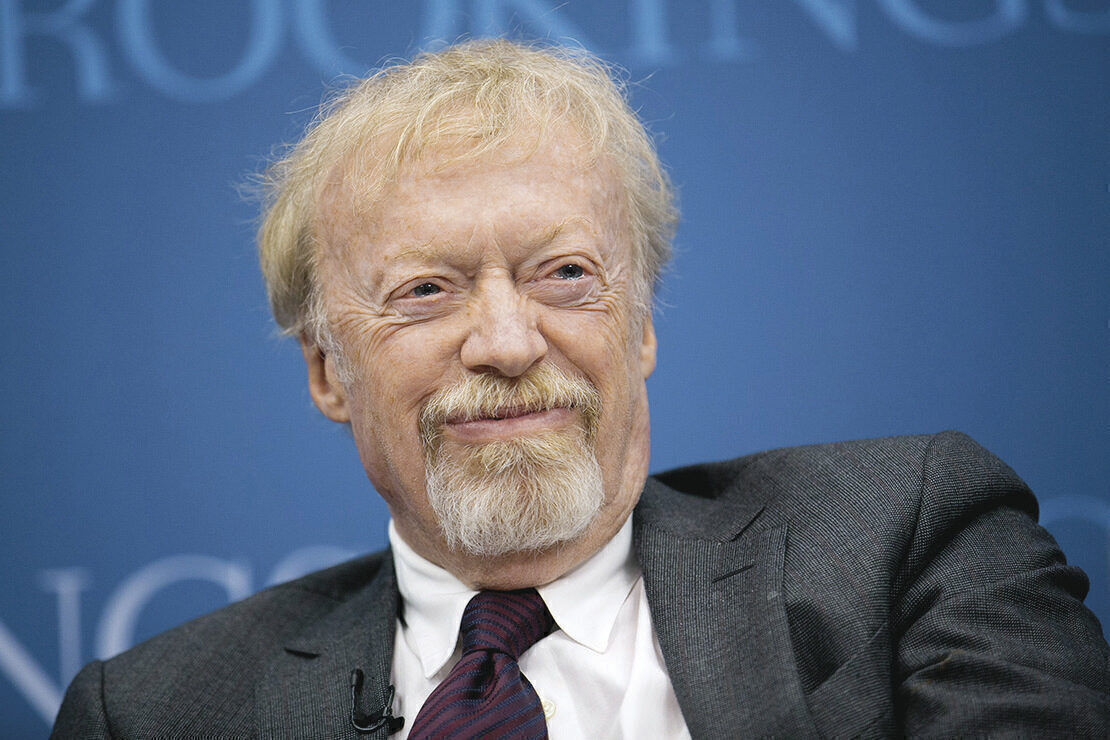
“My sense is that most major givers are impervious to criticism,” says Mr. Medin. “When you reach that kind of success in life and in business, you don’t worry too much about the armchair critics who disagree with your philosophy of giving.”
But one fundraiser recalls meeting a philanthropist who wanted to make a $10 million gift anonymously. The donor was building a huge home at the time, yet was more worried that his gift would spark a backlash. Says the fundraiser: “Bottom line: You can build a huge home worth $20 million or more and get less grief than making a big gift to help others.”
Philanthropists could find their big gifts a subject of congressional debate if the tax-reform legislation expected this year focuses on the charitable deduction. What would be in such legislation is wholly unpredictable, but candidate Donald Trump’s campaign tax plan includes a cap on the deduction, and New York Rep. Tom Reed, a Trump ally, has discussed limiting it for gifts to universities with particularly large endowments.
Meanwhile, the liberal Institute for Policy Studies, in its report on “Gilded Giving,” is calling for caps on the deduction for wealthy donors as well as provisions to force foundations and donor-advised funds to spend down. Chuck Collins, lead author of the report, says a half-dozen philanthropists have told him they will no longer take a tax deduction for their gifts.
Tempting Targets
Criticism of megaphilanthropy has ebbed and flowed through its history, experts say. From the outset of their Gilded Age giving, John D. Rockefeller and Andrew Carnegie met with suspicion and hostility. To be sure, the two men were hated personally, thanks to reviled labor and business practices. But the public also was suspicious of philanthropy itself, worried that big donations subverted core democratic principles. Outrage was such that a federal commission in 1915 investigated “the greatest benevolent organizations” as “a menace to the Republic’s future.” With great wealth already concentrated in the hands of a few, populists and progressives feared giving billionaires any more power than they already had, explains David Nasaw, a Carnegie biographer.
“At the dawn of the age of modern philanthropy, they recognized that philanthropy, for all its benefits, was the least democratic of all institutions,” he says.
In the century since, big philanthropists have rarely confronted such antagonism. Foundations came under fire in the 1950s and 1960s, when Congress questioned the activism of grant makers like the Ford Foundation. But foundation benefactors were rarely targeted; they were often either dead or individuals of little fame, says Stanley Katz, director of the Princeton University Center for Arts and Cultural Policy Studies.
Today, however, philanthropy’s most visible force is once again a collection of famous, self-made business titans. The individual donor has moved into the spotlight “in a way probably not seen since the initial founding of big foundations a century ago,” Mr. Katz says.
At the same time, the country’s levels of income inequality rival those of the Gilded Age. As a result, some view big gifts through a new, more skeptical prism: Is that charity easing inequality or exacerbating it? Even just a decade ago, when the Great Recession was largely unforeseen and the economy and wages were humming along, a $400 million gift to Harvard from a hedge-fund manager might have drawn only praise.
Similarly, the increasing concentration of wealth in the hands of a few means megadonors face heightened scrutiny when they step into the policy arena. To some, big philanthropists today represent the same threat to democracy that Mr. Carnegie and Mr. Rockefeller posed. Their gifts give them power to bypass democratic channels and impose their policy ideas, critics worry — and that power, they say, is earned not through the merits of their ideas but through the force of their cash.
Today’s generation of philanthropists is certainly moving fast and using big dollars to encourage change through government. About two-thirds of Giving Pledge signers, who have promised to devote at least half their fortunes to philanthropy, are committed to policy work, according to research by Duke University political scientist Kristin Goss. Mr. Zuckerberg and Ms. Chan recently hired former top campaign aides to Presidents Obama and George W. Bush to guide their policy and advocacy efforts.
Several philanthropists are condemned for throwing their weight around in the policy arena, among them John and Laura Arnold and Charles and David Koch. The chief target is Bill Gates; education historian Diane Ravitch describes his work helping to create the Common Core curriculum as an “educational coup.”
But the critique extends beyond a few individuals to big philanthropists as a class. “There’s simply too much power in one group of givers,” says Mr. Collins, of the Institute for Policy Studies. Its “Gilded Giving” study showed a growing imbalance in philanthropy, with gifts from the rich soaring and donations from middle- and lower-income households dwindling.
The report raises fears about a “top-heavy philanthropy” in which universities and arts institutions feast on megagifts while social-change groups starve. Perhaps worse, it contends, charities will reconfigure programs and mission to please a small number of wealthy donors.
“The scale of philanthropy is so much bigger compared to the Gilded Age,” Mr. Collins says. “And that’s one of my main concerns: Does philanthropy become another extension of unaccountable private power?”
Congress and Big Philanthropists
Mr. Collins hopes to spark a debate about philanthropy that, like the one at the turn of the 20th century, Congress will take on. “There was a more robust discussion a century ago about the dangers of concentrated wealth and power,” he says. “We’re not quite there yet.”
On the other side of any debate will be many who say the critics are off the mark. Ms. Berman, the adviser to philanthropists, says it’s healthy to raise questions about the power of megadonors. But “the sense that the wealthy philanthropists are really changing our world is a bit exaggerated. The last I looked, the Gates Foundation funding of education was equal to about one week of funding for the New York City schools.”
Others will argue that aggressive, activist big philanthropy is exactly what’s needed now. Government is weak, if not inept, they contend, and private money can be used to experiment and take risks.
“Thank God for folks like the Gates Foundation,” says David Salomon, a New York investment adviser and philanthropist. Mr. Salomon says his family’s foundation makes grants each year that total in “the low seven figures” and often supports education efforts, including charter schools.
Big donors like the Gateses, he says, are often successful people who are smart, creative, and innovative. “We’d be blessed to have as many people like that helping with the country’s problems as we can,” he says.
The clash of ideas about the role of big philanthropists isn’t likely to fade. Sixty-two members of the American Political Science Association have formed a working group to study organized philanthropy, including the role of megadonors. One of them, Ms. Goss of Duke, is writing a book about “policy plutocrats” and helping to assemble research on foundations and billionaire philanthropists as a new political special-interest group.
“We’ve got a bumper crop of people who have unprecedented wealth and want to do some good at the very time we have what seems to be a populist uprising against inside elites,” Ms. Goss explains. “I don’t see this debate going away.”