Charity’s Agenda for the New President: Make Government Work Better

By LAWRENCE OTTINGER
Contributor
November 13, 2008 | Read Time: 8 minutes
The elections that took place last week represented a historic victory for democracy. Yet there is much work to be done to recover from the campaigns that preceded them, which were at times disturbingly bitter and divisive.
Ugly appeals focused on race, gender, class, religion, regionalism, and patriotism have pitted loyal, hard-working Americans against one another and even provoked violent threats from fringe elements within our society. Too often, the presidential campaigns and the news media focused on personalities and negative attacks rather than on substantive approaches to solving the country’s serious economic, environmental, and foreign-policy challenges.
As we move toward the first 100 days of a new administration, charities and foundations are ideally suited to bring the nation back together and to refocus the public’s attention and resources on devising realistic solutions to the country’s troubles.
To do that, those of us at nonprofit organizations must fully involve ourselves and all of our constituents in making democracy work better.
It is clear the public wants change: Both political parties selected as their presidential candidates men who have focused their careers and campaigns on “cleaning up” federal and state government and fighting corruption. Both John McCain and Barack Obama have promoted the virtues of public service and national service. Both have correctly railed against a system in which large monied interests too often drown out diverse, public-interest voices.
But while both presidential candidates set the table for change, neither got into the specifics of what a democracy agenda would look like.
That’s where nonprofit groups are needed, as President Obama takes office in January. Government and business have too clear a conflict of interest to effect real change.
Nonprofit groups, however, know they need government to work better, or else they cannot successfully carry out their missions to help society. Charities must be united as they seek to influence decisions about taxes, spending, and federal regulations, especially at this time of economic crisis.
None of those decisions can be made well, however, unless American citizens believe their voices have been heard and that they can trust their government to operate in an honest, open, and effective way.
So nonprofit groups of all kinds — not just those whose missions are focused on good government — must make it a priority to push for change. Among the items nonprofit groups should consider pushing:
Clean up campaign financing. To achieve a responsive government, America needs to focus on how to create fairer, competitive elections based on ideas and not on money.
In Arizona, Connecticut, Maine, and other jurisdictions, “democratically financed” elections have opened the political process to new candidates who could not have afforded to run. Candidates are required to garner large numbers of small gifts to qualify for government campaign help, and they must promise to shun other private contributions.
Changing the financing mechanism has focused candidates and campaigns on their constituents and the issues.
We must focus not solely on legislative- and executive-branch elections. It’s time to overhaul how state judges are selected, so we no longer end up with judges who are beholden to large campaign contributors. Some states use independent commissions to recommend judges for appointment, while others are moving to public financing of judicial elections.
Improve the administration of elections. Last week’s voter turnout was extraordinary — thanks in part to the work of many nonprofit campaigns to register voters and urge them to go to the polls. But turnout was still far lower than many established democracies in the world. We simply don’t put enough resources into our elections, and we make it too difficult to vote.
Since the 2000 election, governments have taken important steps forward along with a few steps back.
Now is the time to finish fixing our voting system. No one should have to wait hours to vote in a democracy. We also must have systems for verifying the credibility of voting machines, so citizens can trust the results.
State election directors should be nonpartisan officers. We’re living in the 21st century and need our voting and administration of elections upgraded accordingly.
In addition, there should be universal voter-registration systems that protect against fraud. Election Day registration has increased voting in states that have used it, without evidence of voter fraud. Multiparty endorsements and instant runoff voting would allow independent and third-party voices to be heard without acting as spoilers. Eliminating the Electoral College and moving to a national popular vote would mean that “safe” states as well as “swing” states would be actively involved in presidential elections. It also would honor the touchstone principle of voting, which is one person, one vote.
Make sure the 2010 census is accurate. Nonprofit groups have a great stake in the census, because it is literally about whether all the people are counted. Too often, nonprofit clients and constituents are the ones who don’t get counted. Many federal programs distribute money based on census figures, so ensuring its accuracy and reliability are very important.
Overhaul the redistricting process. The current redistricting scheme is a hopelessly partisan system designed to protect incumbent officeholders. It divides communities and eliminates the moderating influences of competition. Nonprofit groups must enlist public support to demand a rational, nonpartisan process.
Focus on the role of the news media. News organizations are supposed to provide checks and balances on the other branches of government. As the news media become more commercialized and consolidated, we risk increased conflicts of interest and a loss in the diversity of viewpoints that the public needs to make informed decisions.
The costs of political campaigns are also driven up because of the sums broadcasters charge to advertise. Nonprofit groups should push for policies that get broadcasters to give some free airtime to candidates; after all, politicians cannot make that request because they do not want to alienate the news organizations that cover their campaigns.
Increase government disclosure. Our current system will always tilt toward companies and other interests that can make or bundle large campaign contributions. But charities can do more to guarantee that citizens are informed and involved in the public policy-making process.
While Congress has passed significant changes in lobbying and ethics standards, the new restrictions must be enforced. Congress also could take several additional steps, such as requiring for-profit firms that receive large sums of money from companies to conduct “grass roots” lobbying campaigns to disclose who is footing the bill for the campaigns. They could also restrict lobbyists and corporate executives from making campaign contributions to lawmakers who sit on the committees they regularly lobby. So bankers and their lobbyists would be restricted from making campaign gifts to legislators on financial-services committees, and college lobbyists would be restricted from making campaign contributions to lawmakers who serve on committees that oversee higher education.
Openness and fairness should be the hallmark of all legislative- and executive-branch decision making. Lawmakers need to provide some consistent due process in their legislating and make it easier for the public to find out when key votes and decisions are made. And the White House and federal agencies should make public their meetings with private organizations.
Disclosure will be key for dealing with our economic crisis. The federal government should be required to make available online every spending and tax decision that has been proposed or adopted.
Make advocacy easier. Civic participation is the essence of our democracy, and nonprofit groups are effective vehicles for engaging the public in the decision-making process. Thus, to ensure a responsive government, nonprofit groups and foundations must be active participants in our democracy.
Charities are not simply government or private contractors. We have a mission that combines solving systemic problems with providing essential services.
We need more smart and ethical public-interest lobbying to ensure that our voices are heard as critical economic and foreign policies are developed.
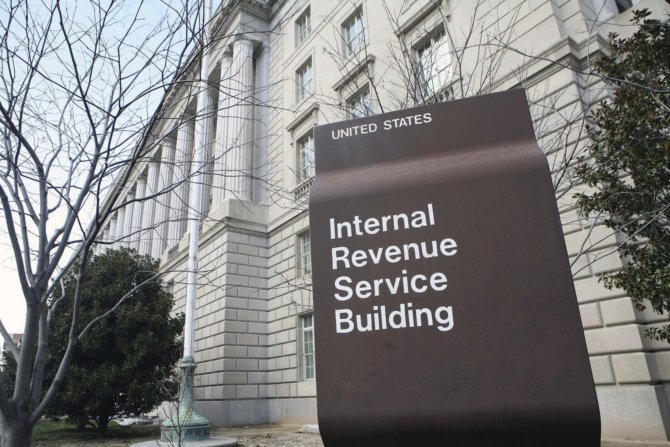
Government regulations need to make it easier for charities to participate. For example, the Internal Revenue Service’s rules about when charities can get involved in nonpartisan voter activities are vague and ambiguous. As a result, nonprofit groups often refrain from activities that are probably completely acceptable. It’s time for the IRS to issue sensible, clear standards to guide charities.
The tax agency should also modify our system so that charities will take advantage of the easier of the two reporting approaches the IRS allows organizations to use to calculate how much they can spend on legally permissible lobbying activities. Now the system guides charities to choose the more vague and burdensome approach, which unintentionally deters charities — especially small and medium-size ones — from undertaking important, lawful activities.
The amount charities are legally allowed to spend under the easier-to-use approach must be increased and indexed to inflation. The limits in place today were adopted in 1976 and do not give nonprofit groups the latitude they need in a more complicated world.
Those and other approaches would do much to make government and officeholders accountable, accessible, and responsive to the needs of average citizens. It’s time for nonprofit groups to push for key changes in the rules of the game and to make America’s policy makers — including all those officials elected to office last week — responsive to “we the people.”
Larry Ottinger is president of the Center for Lobbying in the Public Interest, in Washington.