

To Help Nonprofits as Omicron Surges, Foundations Should Maintain and Expand New Giving Approaches
Nonprofit leaders and staffs are exhausted from two years of continuing crises. Philanthropies need to respond by doubling down on the more equitable and less burdensome grant-making practices put in place early in the pandemic.

By Ellie Buteau and Phil Buchanan
The Road to a Thriving Democracy Runs Through Our Nation’s Schools
The head of a civics-education nonprofit hails a recent opinion piece on how to build up democracy but says it left out an important point: the need to invest in democracy education in schools.

Virtua Health Commits $85 Million to Rowan University for Regional Health-Innovation Hub
Also, the Jim Joseph Foundation has pledged $12 million to help Jewish summer camps recover from the pandemic, the CDC Foundation has given $2.5 million for campaigns to increase vaccine confidence in rural populations and communities of color.

By M.J. Prest
Senior Editor, Solutions

Foundations That Fund Medical Research Should Require a Diverse Pool of Study Participants
For too long, most data for health studies has come from white people or those of predominantly European ancestry. Philanthropy can play an important role in ensuring that people of color are represented in studies that guide treatments for diseases like Covid-19.

Chan Zuckerberg Initiative and IllumiNative Help Native American Groups Fight Vaccine Hesitancy
With nearly $1 million from CZI, grassroots groups are using social media, enlisting influencers, and taking other steps to prevent the spread of Covid.
By Kristen Griffith
Contributor

The Metaverse Is Coming, and Philanthropy Needs to Be Prepared
By intervening early in the development of the metaverse, philanthropy can head off the problems that plague Facebook and help build virtual worlds where democratic values flourish and problems are solved with empathy and understanding.
By Hollie Russon Gilman and Ari Wallach

Foundation Takes Aim at Social Isolation
Even before the pandemic, the RFF Foundation for Aging made social connectedness one of its priorities because stronger social bonds improve older people’s quality of life.

By NICOLE WALLACE
Features Editor
Billions of dollars have been committed, but more attention needs to be paid to communities that lack the ability to advocate to ensure that their neighborhoods benefit.
By dan.parks
Contributor
Disabled People Are Not Invisible — Even if Grant Makers Too Often Overlook Us
A disabled woman working in philanthropy says a Chronicle opinion piece on advancing equity in “invisible” communities “perpetuates the very invisibility it pushes against.”

To Save American Democracy, Donors Should Trade Tax Breaks for Political Wins
One year after the insurrection at the U.S. Capitol, grant makers need a much more powerful response to the continuing spread of right-wing extremism. That should include more direct funding of political organizations and candidates — and a less exclusive focus on organizations with charity status.
By PAMELA SHIFMAN and Lateefah Simon

Vibrant local libraries, community centers, parks, and other forms of civic infrastructure foster a sense of pride and connection to one’s community — and help shut down polarized politics and anti-democratic impulses.
By Stephen Heintz
Contributor

$1 Billion in Gifts Attracts New Attention to the Rules on Charities and Political Giving
The New Venture Fund doubled its donations last year, becoming what some see as a liberal powerhouse to counter Charles Koch’s support of conservatives charities and advocacy groups.

By Alex Daniels
Senior Editor, Foundations

Saving our democracy will require remaking a civil society that not only reckons with the legacy and harms caused by racism but intentionally brings together workers of all races, unites urban and rural communities, and creates opportunity for all Americans.
By Loren McArthur
Contributor

St. David’s Foundation Awards $51 Million to Boost Health Equity in Tex.
Also, Continental Resources gave $25 million to Oklahoma State University to establish an energy institute named for its founder and chairman, and the natural-gas company Tellurian pledged $25 million to the National Forest Foundation.
By M.J. Prest
Senior Editor, Solutions

Grant Makers Can Advance Equity by Revealing ‘Invisible’ Communities
Too often grant makers stay on the beaten path, missing opportunities to help in “blind spots” that lack resources and visibility. Here’s how one foundation made it possible for under-resourced nonprofits to get attention.
By Bob Atkins
Contributor
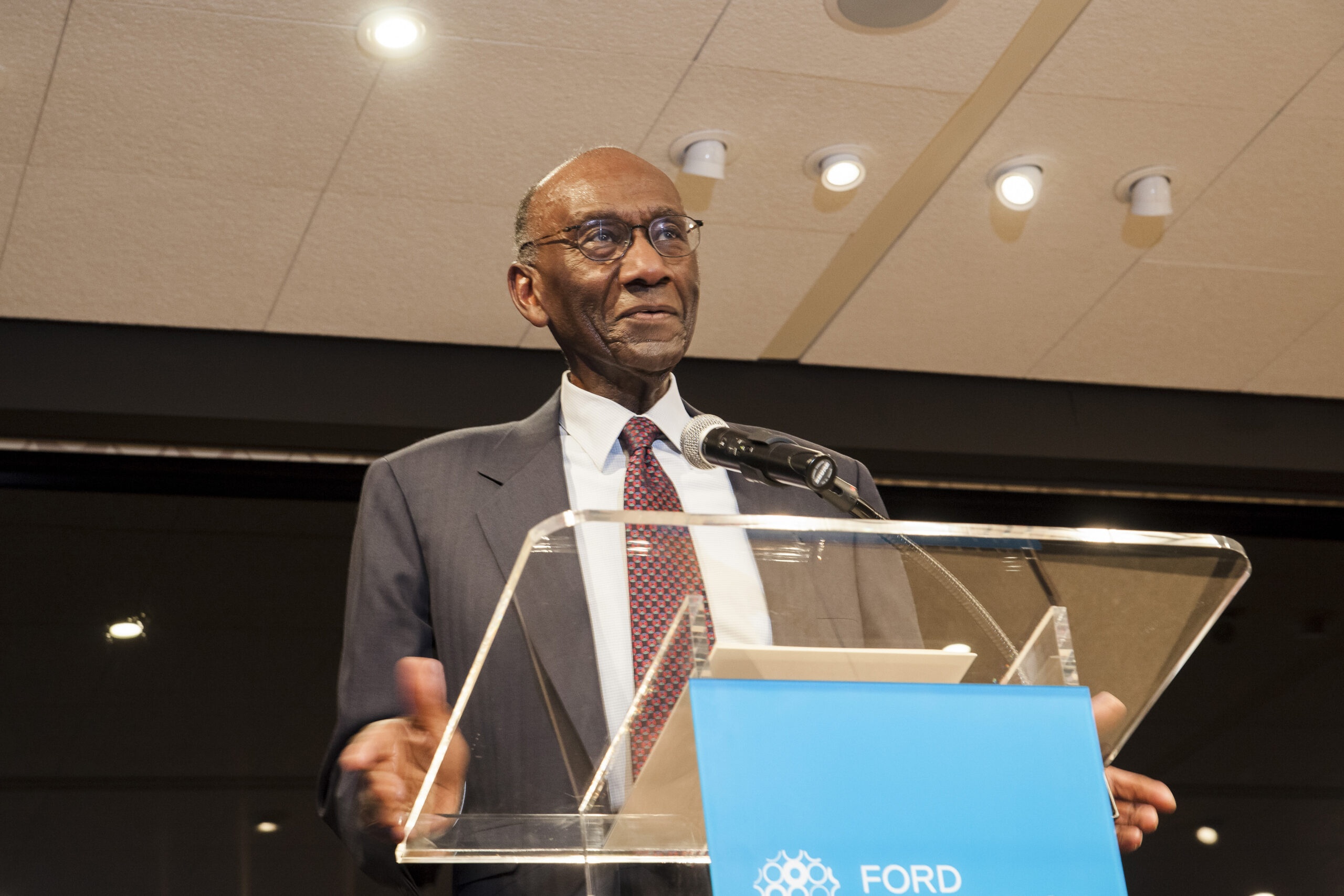
Franklin Thomas’s Legacy at the Ford Foundation Permeates Philanthropy Today
As the first leader of color to head a major philanthropy, Thomas averted the foundation’s financial dissolution, looked out for grantees, and made diversity a core part of the institution’s work, writes Susan Berresford, who succeeded him as president.
By Susan Berresford
Contributor